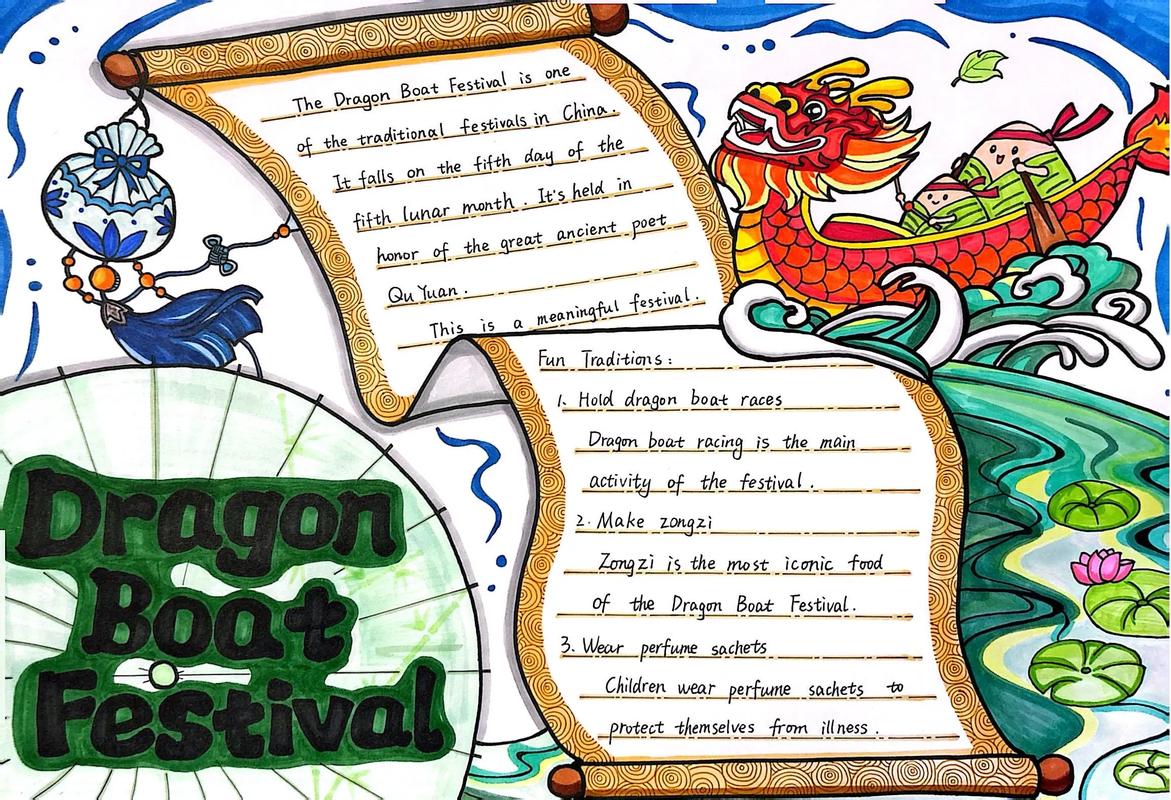
The Dragon Boat Festival, also known as Duanwu Festival, is a traditional Chinese holiday celebrated on the 5th day of the 5th lunar month. With a history spanning over 2,000 years, it is deeply rooted in Chinese culture and marked by dragon boat races, zongzi (glutinous rice dumplings), and the commemoration of the poet Qu Yuan. Poetry has always been an integral part of this festival, capturing its essence, emotions, and cultural significance. In English, these poems serve as a bridge, allowing the world to appreciate the beauty and depth of Duanwu traditions.
The Poetic Essence of Duanwu Festival
Duanwu poetry often revolves around themes of patriotism, remembrance, nature, and the joy of communal celebrations. The festival’s origins are closely tied to Qu Yuan, a loyal minister of the Chu State during the Warring Periods. His tragic drowning in the Miluo River and the subsequent search for his body by locals who threw zongzi into the water to feed fish and prevent them from devouring his body form the core narrative of Duanwu. English poems about Duanwu frequently evoke this poignant story, using vivid imagery to depict sorrow, loyalty, and the enduring human spirit.
For example, a classic English translation of a Duanwu-themed poem might read:
"On the fifth day of the fifth moon, we gather,
Boats cut through waves like dragons in flight,
Zongzi wrapped in leaves, a fragrant offering,
To honor Qu Yuan, a soul burning bright."
Such verses not only narrate the festival’s customs but also convey the reverence for historical figures and the collective memory of a nation.
Themes in Duanwu Poetry in English
Duanwu poetry in English explores a rich tapestry of themes, each adding a layer of meaning to the celebration.
Remembrance and Patriotism
Many English poems focus on Qu Yuan’s unwavering loyalty and his tragic end. These works often use metaphors of rivers, boats, and tears to symbolize grief and admiration. For instance:
"The river flows, carrying whispers of old,
A poet’s dream, in waters cold,
Oars dip and rise, in rhythmic sigh,
Beneath the sky where heroes lie."
Here, the river becomes a timeless witness, and the dragon boat races a ritual to keep Qu Yuan’s legacy alive.
Nature and Seasonal Beauty
Duanwu occurs during the height of summer, a time of lush greenery and vibrant life. Poems in English often celebrate the season’s beauty, linking it to the festival’s lively atmosphere. Lines like:
"The sun beats down on fields of green,
Dragon boats race, a vibrant scene,
Leaves of bamboo, scent of rice,
In the warm embrace of summer’s skies."
evoke the sensory delights of the festival, from the aroma of zongzi to the excitement of the races.
Family and Togetherness
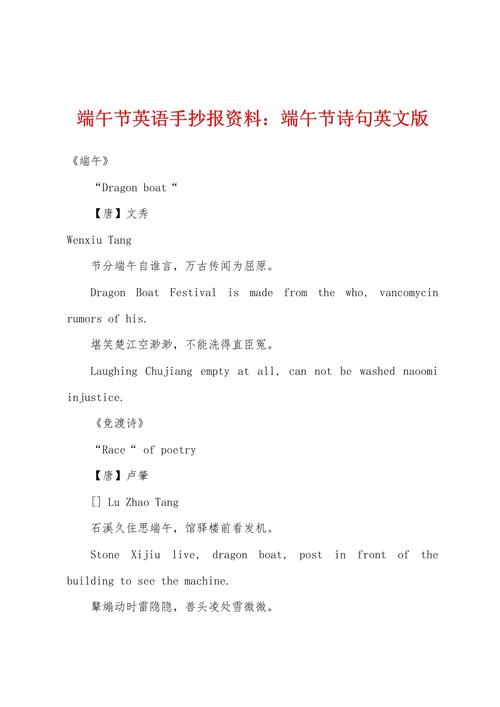
Zongzi-making is a cherished family tradition during Duanwu. English poems highlight the warmth of these moments, emphasizing unity and cultural传承 (inheritance). For example:
"Hands fold and wrap, with care and grace,
Leaves embrace the rice’s sweet embrace,
Laughter fills the air, as stories shared,
A festival of love, beyond compare."
Such verses capture the emotional core of Duanwu, where food and family intertwine to create lasting memories.
Notable English Poems and Their Significance
Several English poems about Duanwu have gained recognition for their evocative language and cultural insights. Below is a table summarizing a few notable examples:
| Poem Title | Key Themes | Notable Lines |
|---|---|---|
| Ode to Qu Yuan | Patriotism, grief, remembrance | "O river, carry our sorrow to the sea, For Qu Yuan’s spirit, forever wild and free." |
| Dragon Boat Festival | Nature, community, tradition | "Boats like dragons dance upon the wave, A festival of courage, strong and brave." |
| Zongzi and Memories | Family, love, cultural inheritance | "In every leaf, a story’s told, Of love and warmth, more precious than gold." |
These poems, whether translated from Chinese or originally composed in English, reflect the universal appeal of Duanwu’s themes. They remind readers that while cultures may differ, the emotions of loss, joy, and belonging are shared by all.
The Role of Poetry in Modern Duanwu Celebrations
In contemporary times, Duanwu poetry in English continues to thrive, both in traditional and digital formats. Social media platforms, literary journals, and cultural events often feature poems that reimagined Duanwu for a global audience. For example, a modern English poem might blend traditional imagery with contemporary concerns, such as environmental preservation:
"Dragon boats cut through the polluted stream, A call to action, a waking dream,
Clean the waters, save the river’s grace,
For Qu Yuan’s homeland, a better place."
Such adaptations show how poetry remains a dynamic force, connecting the past to the present and inspiring collective action.
FAQs About Duanwu Poetry in English
Q1: Why is Qu Yuan such a central figure in Duanwu poetry?
A1: Qu Yuan is revered as a symbol of patriotism and integrity in Chinese culture. His tragic story—exiled and ultimately drowning himself in protest against corruption—resonates deeply with the values of loyalty and sacrifice. Duanwu poetry, whether in Chinese or English, honors his memory by retelling his story and reflecting on the virtues he embodied. The act of throwing zongzi into the river and racing dragon boats originated as tributes to him, making him an irreplaceable muse for poets.
Q2: How do English translations of Duanwu poems preserve cultural nuances?
A2: Translating Duanwu poetry into English is a delicate balance of literal accuracy and artistic expression. Skilled translators often employ cultural annotations, footnotes, or contextual explanations to convey meanings that may not have direct English equivalents. For example, the term zongzi is often retained with a brief description, while metaphors like "dragon boats" are preserved to maintain their symbolic power. Additionally, translators may adapt imagery or rhythms to resonate with English-speaking audiences without losing the poem’s original essence. This ensures that the cultural richness of Duanwu is accessible and meaningful across languages.
In conclusion, Duanwu poetry in English is a vibrant tapestry of history, emotion, and culture. It transforms ancient traditions into universal narratives, allowing people worldwide to connect with the spirit of the Dragon Boat Festival. Through verses that celebrate loyalty, nature, and family, these poems ensure that the legacy of Qu Yuan and the joy of Duanwu continue to inspire for generations to come.