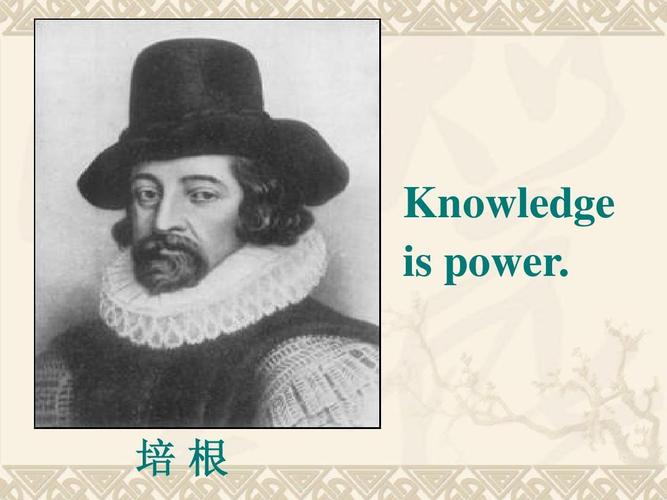
Francis Bacon, a prominent English philosopher, statesman, and essayist of the Renaissance era, is renowned for his profound insights into human nature, knowledge, and society. His works, particularly Essays, are filled with timeless wisdom that continues to resonate with readers today. Below is a collection of his notable quotes in English, accompanied by brief explanations to capture their essence, followed by a FAQs section to address common queries about his philosophy.
Bacon’s reflections on knowledge and learning emphasize the importance of experience and critical thinking. He famously stated, “Knowledge is power.” This concise yet powerful phrase underscores the idea that true understanding—gained not through rote memorization but through practical application and inquiry—empowers individuals to navigate the world effectively. In Of Studies, he elaborates, “Read not to contradict and confute; nor to believe and take for granted; nor to find talk and discourse; but to weigh and consider.” Here, Bacon advocates for purposeful reading, urging readers to engage with texts critically rather than passively accepting ideas. He also warns against the pitfalls of superficial learning: “Some books are to be tasted, others to be swallowed, and some few to be chewed and digested.” This metaphor distinguishes between books that offer fleeting entertainment, those that provide quick information, and those that demand deep, reflective study for lasting value.

On human nature and virtue, Bacon’s observations remain strikingly relevant. He explores the duality of human behavior in Of Truth: “What is truth? said jesting Pilate, and would not stay for an answer.” This line critiques those who dismiss truth as unattainable or irrelevant, highlighting the human tendency to evade difficult questions. Regarding virtue, he argues, “Virtue is like a rich stone, best plain set.” Just as an unadorned precious stone retains its intrinsic value, true virtue shines brightest without artificial embellishment, suggesting that authenticity and integrity are paramount. Bacon also addresses the dangers of excess: “Revenge is a kind of wild justice.” While acknowledging the urge to retaliate, he implies that uncontrolled vengeance undermines moral order, advocating instead for measured, lawful responses.
In reflections on success and adversity, Bacon offers practical wisdom for navigating life’s challenges. He famously notes, “Choose the life that is most useful, and habit will make it the most agreeable.” This emphasizes the role of discipline in shaping a fulfilling life, suggesting that aligning actions with purpose leads to both productivity and contentment. On adversity, he writes, “Adversity is not without comforts and hopes.” Far from being purely destructive, hardship fosters resilience and reveals hidden strengths, a theme echoed in his observation that “The wisest men make not always the best use of their best.” Here, he cautions against complacency, reminding even the most accomplished that self-awareness and continuous improvement are essential.
Bacon also delves into the nature of time and human relationships. In Of Marriage and Single Life, he observes, “He that hath wife and children hath given hostages to fortune; for they are impediments to great enterprises, though otherwise helps to life.” This balanced view acknowledges both the constraints and rewards of family life, recognizing that personal relationships require sacrifices but also enrich human experience. Regarding time, he asserts, “Time is the measure of all things, and of all things themselves.” Time, for Bacon, is not merely a passing entity but the very framework against which meaning and value are measured, urging individuals to use it wisely.
Finally, his thoughts on justice and friendship reflect his deep understanding of social dynamics. In Of Justice, he states, “Natures wonders are to be heard in common, but secrets are to be revealed to few.” This speaks to the importance of discretion—public matters deserve collective attention, but private wisdom should be shared selectively. On friendship, he famously declares, “It was a high speech of Seneca… that ‘the things that were hard to bear are sweet to remember.’” Bacon expands on this by suggesting that shared struggles and joys form the foundation of true friendship, as memories—whether bitter or sweet—bind individuals together through mutual understanding.

FAQs
Q1: What is the main theme of Bacon’s Essays?
A1: Bacon’s Essays primarily explore themes of human nature, knowledge, virtue, and social conduct. He emphasizes the importance of practical wisdom over abstract theory, advocating for a balanced approach to life that combines reason, experience, and moral integrity. Key recurring ideas include the pursuit of knowledge for empowerment, the dangers of excess, and the value of self-discipline in achieving success.
Q2: How did Bacon’s philosophy influence modern thinking?
A2: Bacon’s ideas laid the groundwork for the scientific method and empiricism, stressing observation, experimentation, and inductive reasoning. His belief that “knowledge is power” shifted the focus of learning from scholastic speculation to practical application, influencing fields like science, education, and politics. Additionally, his insights into human behavior—such as the critique of confirmation bias and the importance of critical thinking—remain foundational in modern psychology and philosophy.